You Said You’d Stop. So Why Are You Still Doing It?
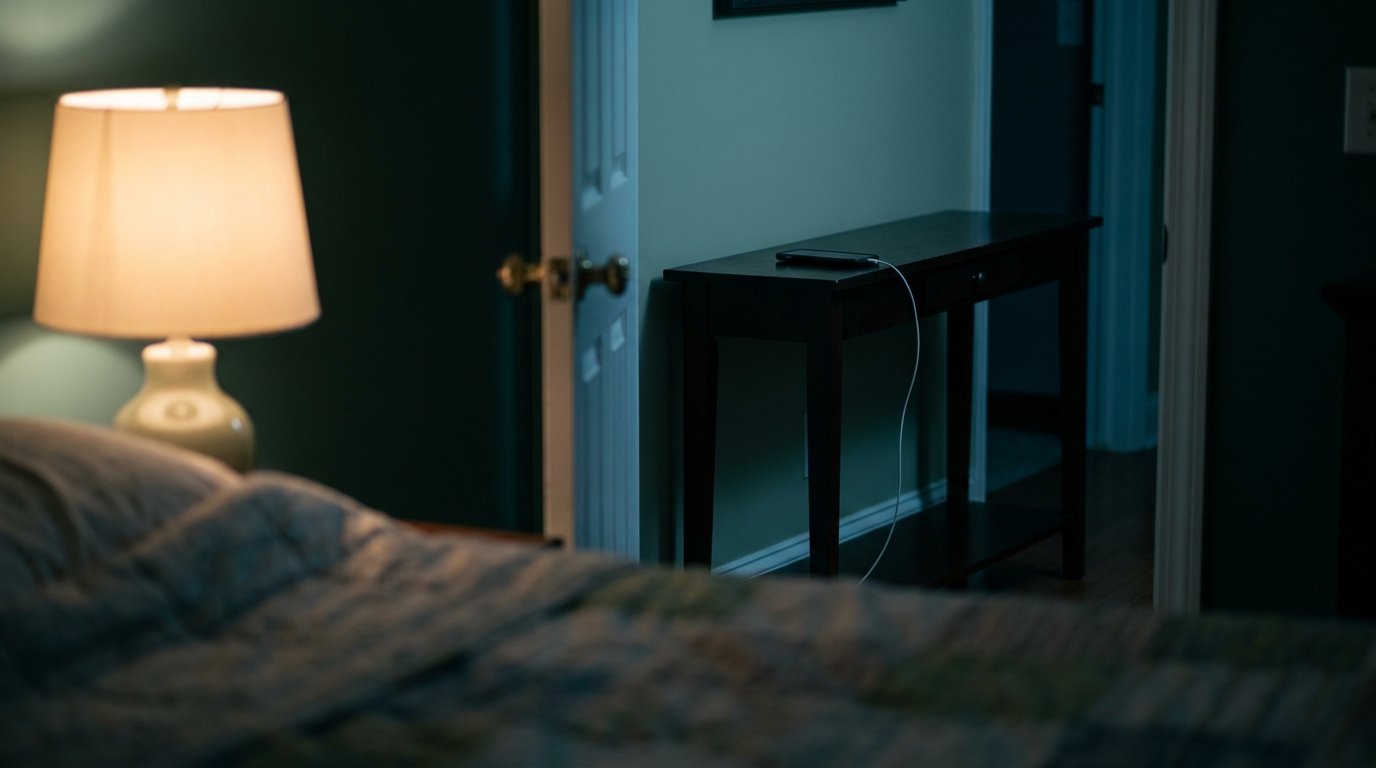
You planned to be in bed by 10:30, but it is 11:45 and you are still scrolling. You promised yourself one episode, but three episodes later the streaming app checks if you are still watching.
Most people recognize this scenario. We decide on one thing, but do another, often without much enjoyment. This raises an important question: who is actually making the decision?
Dave Barney and Luke Olson, hosts of the Mental Fitness Podcast, focused an episode on this question. Their answer begins with agency.
What agency means in mental fitness
In mental fitness, agency means choosing how you want to live and aligning your behavior with that choice over time. No one has unlimited options. Money, health, responsibilities, and circumstances set boundaries, but you still make many daily choices about your time and attention.
We often define freedom as not being told what to do by others. Dave added that true freedom also means not letting your appetites dictate your actions.
Pleasure has its place. You can care about nutrition and still love dessert, or enjoy an hour of your favorite show each night. The problem is when thirty minutes turns into three hours, night after night.
Dave put it this way: “Freedom is being able to say no to something you want because you want something else more.”
Three questions to test a habit
Choose one behavior that might limit your choices. It could involve your phone, food, shopping, gaming, alcohol, or work. Then answer these three questions honestly:
- Can I reliably choose when I start?
- Once I start, can I reliably choose when I stop?
- Is this getting in the way of the life I want?
If you answer no to either of the first two, and yes to the third, your habit is in control, not you.
Honesty is difficult because most people downplay their habits. The hosts recommend measuring instead of guessing. Your phone already tracks screen time. If you think, “I can quit any time,” ask yourself when you last did.
Shame makes honesty harder, so set it aside. People are creatures of habit, and many apps and games are designed to be addictive. Dave’s point is that falling into a habit is normal, but you can still notice it and choose a way out.
Wanting is different from enjoying
If you already know better, why doesn’t knowing fix it?
Addiction research separates wanting a reward from liking it. The brain circuits behind wanting and liking are different. Wanting is driven by large, durable systems involving dopamine. Liking, or actual pleasure, relies on smaller, more fragile systems and does not depend on dopamine. In addiction, wanting often increases, especially with cues, even if liking does not.
This explains a common feeling, which Dave described as, “I’m not even enjoying this thing anymore, but I’m still stuck doing it.”
He shared Dr. Jud Brewer’s story. Dr. Brewer, a psychiatrist and habit researcher, once realized that when he ate gummy worms slowly and paid attention, he didn’t even like them.
So when a craving appears, get curious instead of strict. Ask yourself if you’re enjoying it or just wanting it.
A habit can start before you decide
Your brain links places and moods to behaviors. If you scroll in bed, lying down becomes a cue to scroll. Stress, boredom, or notifications can trigger the habit. Repeat this often enough, and the behavior starts before you even decide, leading you to ask, as Dave did, “Why is my phone in my hand?”
A 2025 experiment shows setup matters. Researchers blocked mobile internet on 467 participants’ smartphones for two weeks, but left calls and texts. The study found that 91% improved in at least one of attention, mental health, or well-being. Without mobile internet, people spent more time socializing in person, exercising, and being in nature.
No one told them to see friends or go outside. When a compelling default was removed, people naturally returned to what they valued. Dave saw this as encouraging: the values were always there, but the environment made them harder to follow.
Future you gets a vote
Each of these moments is a negotiation between present and future you. Present you wants one more episode, while future you wanted eight hours of sleep. Compulsive habits let the present self overrule the future self repeatedly.
As Dave put it, “mental fitness means future you gets a vote too.”
The vote only counts if future you knows what you want. Luke noted that Odysseus, whose story follows, was trying to get home. He had a goal. Without one, yesterday’s habits dictate today by default.
Decide in advance
Homer’s Odyssey has a scene for this. The sorceress Circe warns Odysseus about the Sirens. Anyone who hears their song never returns home, and they sing from a meadow beside a great heap of bones. Odysseus wants to hear the song and live. Following her instructions, he seals his crew’s ears with wax and has himself bound to the mast, with orders to tie him tighter if he begs to be released. When the song reaches him he does signal to be let loose, and two of his men add more rope.
Odysseus escaped the Sirens because he decided what to do before facing them. In the moment, he had no willpower left.
The hosts call this exercising agency in advance. Relying on self-control means making the same decision over and over. With a phone in your pocket, Dave estimated, you might revisit the choice 50 to 100 times a day. Leaving it in another room is one decision that saves hours.
The singer Ed Sheeran made a permanent version of that choice. He has said he got rid of his phone in 2015 because he was losing real-life interaction, and that he moved everything to email, which he answers once a week. Smaller constraints work on the same principle. You can charge your phone outside the bedroom, or keep the snack you overeat out of the house.
As Dave said, “sometimes increasing our freedom means voluntarily limiting our options.”
Try a five-step agency reset this week
The hosts offered five steps. Treat each as an experiment.
- Measure it. Choose one area where your behavior does not match your intentions and track it for a week without making changes. Screen time reports can help with phone habits.
- Find the trigger. Instead of asking, “what’s wrong with me,” ask, “what happens right before this?” Common answers include boredom, stress, loneliness, or a certain time of day.
- Set one constraint in advance. Pick a voluntary limit, such as no phone at the dinner table or grocery shopping after eating.
- Wait ten minutes. Remember, an urge is not an instruction. You do not have to quit something forever. Tell yourself you’ll decide in ten minutes, then see how you feel.
- Replace it. Figure out what the habit did for you. Did it ease stress or fill boredom? Then substitute something else. A short walk or reading a paper book with your phone in another room may feel less rewarding at first.
When a reset is not enough
Scrolling too long and being unable to stop drinking are very different problems, and the hosts make that clear. If a behavior is seriously harming your life and you cannot control it, reach out to a friend, doctor, therapist, support group, or addiction specialist. Dave said asking for help is an act of agency. Admitting your own effort is not enough can be the most courageous choice.
You can still enjoy dessert and your favorite show. The goal is to gradually become the person who chooses where your time and attention go.
You can train that kind of freedom.